What Insurance Companies Look for During Mold Claims
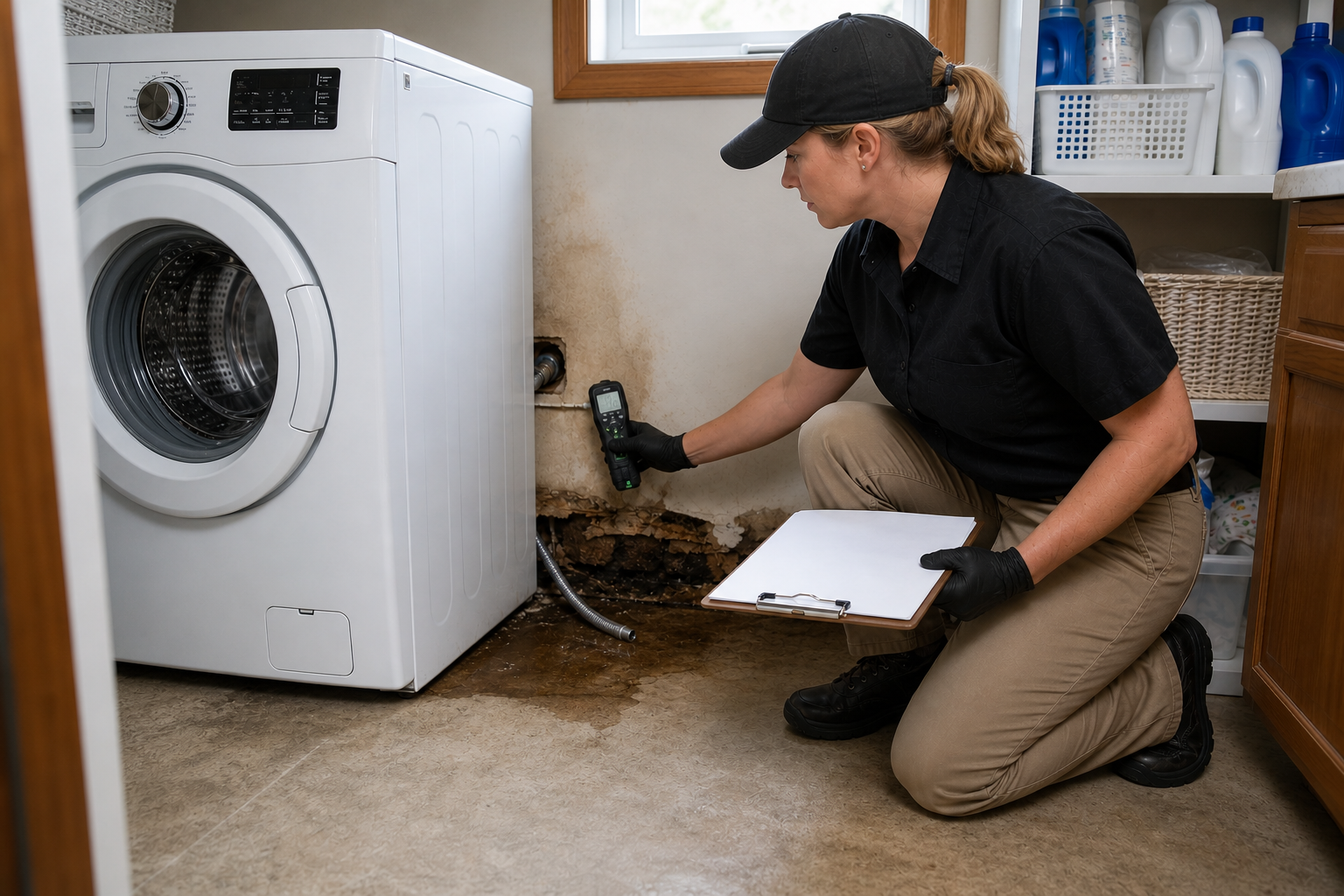
Mold claims are rarely just about visible growth on a wall or ceiling. From an insurance standpoint, the bigger issue is usually how the mold started, how long the moisture problem was active, how well the property owner responded, and whether the damage falls within the policy’s covered cause of loss. For homeowners, landlords, property managers, and investors, that means mold remediation is only part of the picture. Documentation, timing, and causation matter just as much as cleanup.
In the field, many denied or limited mold claims trace back to missing information rather than just the presence of mold itself. A musty odor, basement mold after water damage, or mold in commercial buildings may be very real, but insurers typically want proof of the moisture source, the extent of damage, and the steps taken to prevent the issue from getting worse. That is why a strong mold claim usually starts with good records, a clear timeline, and a professional understanding of the water damage mold risk.
Why Causation Matters
One of the first things insurance companies look for during mold claims is causation. They want to know what caused the moisture that allowed mold to grow and whether that cause is something the policy actually covers. The Texas Department of Insurance explains that most homeowners and renters policies cover sudden and accidental water damage, such as a burst pipe, toilet overflow, or broken washer hose, and that mold developing on a damaged item may be covered when it results from that kind of covered loss.
The problem is that insurers usually treat long-term moisture very differently. The same Texas guidance says most home policies usually do not cover damage from gradual leaks or seepage, and it also notes that mold from flooding is not covered by a standard home policy because flood losses require separate flood coverage. The NAIC’s homeowners insurance consumer guide similarly notes that mold is often excluded from standard homeowners coverage.
That is why causation is such a big deal in mold claims. If the insurer sees the issue as a sudden water event, the claim may move in one direction. If the insurer sees it as a maintenance problem, long-term dampness issue, or excluded flood-related condition, the claim conversation changes quickly.
Timeline and Mitigation
Insurance companies also look closely at timeline and mitigation. In plain terms, they want to know when the water intrusion happened, when the mold was discovered, and what the property owner did once the problem became known. The United Policyholders mold claim tips page advises claimants to document the source and extent of water intrusion, record the date of photos and video, and capture visible mold contamination as early as possible.
That kind of documentation matters because mold can develop fast when moisture is left unaddressed. The EPA’s brief guide to mold and moisture says mold will grow where there is moisture and recommends drying water-damaged areas and items within 24 to 48 hours to help prevent mold growth. The EPA’s water damage cleanup table also says its guidance is built around response to clean water damage within 24 to 48 hours to help prevent mold growth.
From an insurance perspective, that means delays can affect how the loss is viewed. If the timeline shows quick reporting, prompt drying, and reasonable efforts to reduce damage, the claim tends to look more like an active response to a sudden event. If the file shows long gaps, repeated staining, recurring humidity issues, or no attempt to mitigate, insurers may question whether the mold was preventable or whether it developed over time.
This is one reason mold after flooding, mold smell in house complaints, and hidden moisture behind walls should never be brushed off as minor issues. Even if the visible growth seems limited, the claim outcome often depends on how early the problem was identified and how clearly the moisture event was documented.
Scope and Documentation
Once the insurer understands the likely cause and basic timeline, the next question is scope. They want to know how much of the structure was affected, what materials were damaged, whether contents were involved, and whether the mold problem appears isolated or widespread. United Policyholders emphasizes documenting not just visible mold, but also the source and extent of water intrusion, which is exactly the kind of information adjusters use to evaluate how broad the loss really is.
In practical terms, this usually means the file should include more than a few close-up photos. Good claim documentation often includes wide shots of affected rooms, close-ups of damaged materials, photos of the moisture source, notes on when the damage was discovered, contractor observations, and any records showing attempts to dry or stabilize the area. For landlords and property managers, written tenant complaints, maintenance logs, and vendor reports can also become important parts of the record.
The scope question becomes even more important in larger losses. The EPA’s mold remediation guidance for schools and commercial buildings lays out different cleanup methods based on the size and type of contamination and notes that some remediation guidelines apply when containment is fully sealed and maintained under negative pressure relative to surrounding areas. That matters because insurers often look at whether the remediation method matches the actual scope. A small isolated issue and a multi-room contamination event should not be documented or remediated the same way.[epa]
In a Michigan field context, that is where mold inspection and environmental testing for property managers can become especially useful. When the visible mold is only part of the story, professional moisture mapping, scope review, and remediation documentation can help show whether the problem is localized, hidden in building cavities, or tied to a larger indoor air quality issue.
Professional Records Matter
Insurance companies also look for professional support behind the claim. That does not always mean a giant remediation project is required, but it often means the claim is stronger when there is a credible inspection, a defined mold remediation process, and records showing what was done and why. The Texas Department of Insurance says that if you file a claim for mold removal, you will need an inspection showing the mold was removed and that the problem causing it was fixed, and it also notes that mold professionals must provide a certificate that the mold was removed.
That point is easy to underestimate. Some property owners focus heavily on surface cleanup, but insurers are usually looking for proof that the underlying moisture issue was addressed. If the leak, seepage, condensation problem, or water intrusion source remains active, the insurer may reasonably ask why the condition would not simply return.
Professional records also matter because mold claims often involve disputed scope. If a contractor or adjuster asks why drywall was removed, why containment was used, or why additional materials were classified as affected, those decisions are easier to defend when they line up with recognized remediation guidance. EPA guidance for larger mold remediation projects includes containment-based methods, which helps show that not every mold job is just a wipe-down and paint-over situation.
For mold remediation for landlords, multifamily owners, and commercial property operators, this can be especially important. Multi-unit complaints, recurring odors, and mold in commercial buildings often involve shared walls, HVAC pathways, or repeated moisture pathways that are harder to explain without professional reporting.
Policy Language and Next Steps
Finally, insurance companies look for how the claim fits the actual policy language. The NAIC guide notes that mold is often excluded from standard homeowners policies. The Texas Department of Insurance also says that most home policies do not include mold cleanup and testing after a damaged item is removed, although an insurer may allow additional coverage options in some cases. That does not mean every mold claim will be denied. It means the exact coverage often turns on whether the mold came from a covered water event and what the policy says about cleanup, testing, and limits.
For that reason, property owners should be careful not to assume that “water damage” and “mold remediation” will always be treated the same way. Insurers may pay for tearing out and replacing water-damaged materials in one situation, but take a narrower view of post-removal mold testing, odor work, or broader remediation scope in another. That is why careful claim preparation matters.
Before submitting or expanding a mold claim, it helps to have the following ready:
Photos and video showing the water source, visible mold, and affected materials.
Dates for discovery, reporting, emergency drying, and contractor visits.
Moisture or inspection findings tying the mold to the water event.
Invoices, drying logs, and repair estimates.
A clear explanation of what was done to stop the moisture source.
Any mold inspection, mold remediation, or clearance documentation already completed.
The strongest mold claims usually answer four practical questions: what caused the moisture, when it happened, how far the damage spread, and what was done to stop it. If those answers are vague, incomplete, or inconsistent, the insurer has more room to challenge the claim.
If you are dealing with mold after water damage, ongoing odor issues, or a claim that depends on proving the extent and cause of contamination, contact BDS Environmental to discuss mold inspection, mold remediation, and environmental remediation services. Clear documentation and a well-defined scope can make a major difference when you need to show what happened, what was affected, and what it will take to address the problem properly.